

Low-temperature waste heat recovery
Waste heat.
Paid for.
Thrown away.
Brownian Energy is developing a modular heat engine that converts low-temperature waste heat — from industrial processes, combined heat and power, data centres, and beyond — into usable energy. We are at proof-of-concept stage and actively seeking research partners, pilot operators, and future licensees.
Proof of concept · Switzerland
Heat rejected by data centres
415 TWh / yr
Worldwide, 2024 — on track for 950 TWh by 2030. Paid for. Thrown away.
Source: IEA, 2025
Electricity Brownian could recover
up to ~7 TWh / yr
From that same heat — if recovered at 65 °C via warm-water loops.*
* Brownian engineering model — upper-bound potential, not a forecast. In validation.
Why This Matters
Industry, power generation, and infrastructure collectively reject vast quantities of heat in the 50–150 °C range — process cooling, CHP exhaust, data centre thermal output, and dozens of other streams. Existing recovery technologies struggle to be economical at these temperatures, so the heat is usually vented. Brownian Energy's architecture is designed specifically for this band. At proof-of-concept stage, our goal is to demonstrate that these streams can be converted economically at scale.
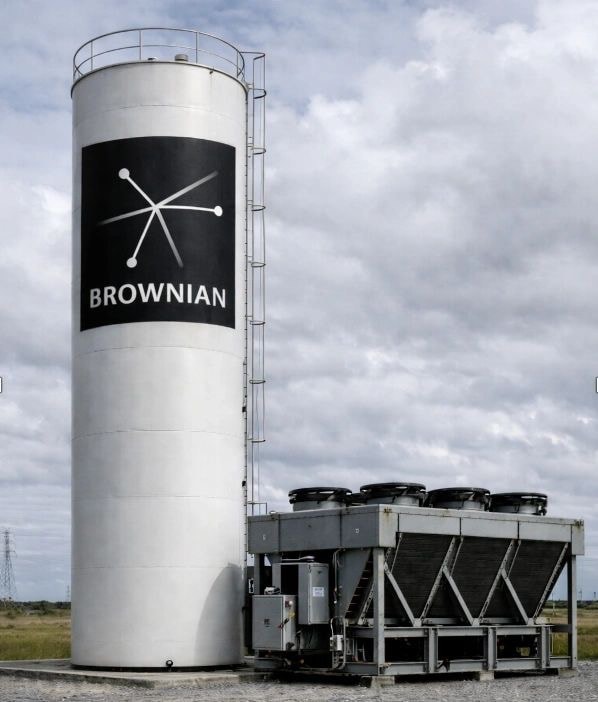
Pilot Plant
Looking for pilot partners
We are looking for partners with waste heat streams in the 50–150 °C range — industrial processes, CHP, data centres, or any other source. If that describes your facility, we would like to hear from you.
About Brownian Energy
Our Focus
Recovering economic value from low-temperature waste heat that existing technology cannot efficiently convert.
Our Technology
A new heat engine architecture targeting the 50–150 °C range. At these temperatures, existing recovery technologies struggle to be economical, so the heat is usually vented. Our architecture is designed to remain economical in this band.
Current Stage
Proof of concept. We are seeking research partners, potential future licensees, and pilot project operators to advance the technology toward field validation.